

Take the user as the foundation and the market as the core; establish the corporate philosophy of "innovative management
Precision Engineering in Modern Noodle Production Lines
Classification:
News
Group News
Industry News
Special Reports
Author:
DONGFANG NAOMU
Source:
www.noodlemachinery.com
Release time:
2025-10-13
The manufacturing of stick noodles, a staple food across many cultures, has evolved significantly with the integration of advanced mechanization. At the heart of a modern production line lies the critical phase where the continuous sheet of dough is precisely cut into individual noodles. This process, known as quantitative cutting, is paramount for achieving consistency in the final product's quality, texture, and appearance. The technological sophistication involved in this stage ensures efficiency and addresses fundamental challenges inherent in high-speed food processing.
Quantitative cutting is achieved seamlessly following the integration and operation of flat rolls. As the dough is progressively thinned through a series of these rollers, it passes through the final one or two flat rolls, which are calibrated to impart a perfectly uniform thickness to the noodle sheet. This consistency is not merely an aesthetic goal; it is a foundational prerequisite for all subsequent processing parameters. The final thickness of the noodle sheet directly influences the cutting dynamics, drying time, and the ultimate cooking quality of the noodles. Any variance at this stage can propagate through the entire production chain, leading to waste or substandard products. A key innovation that optimizes this transition from rolling to cutting is the application of a single, independent variable frequency drive for the surface cutter. This design specifically addresses the persistent challenge of managing tension in the dough strip between the final roller and the cutting blade. This tension is highly susceptible to fluctuations caused by factors like dough elasticity, feed speed, and humidity. By decoupling the cutter's speed from the main roller drive system, operators gain exquisite, independent control over the cutter's rotational velocity. This makes adjusting the dough strip's tension not only significantly easier but also far more precise, leading to a stable and problem-free cutting process that is remarkably straightforward to manage.
The cutting implement itself is a masterpiece of specialized design. Employing a unique thin-blade cutter is crucial for achieving a superior finish. This specialized tool produces noodles with an exceptionally smooth and burr-free surface, characterized by high regularity and a complete, unbroken shape. The geometric precision of the cut minimizes surface damage to the individual noodles. This is particularly vital when processing noodles with high moisture content, which are more delicate and prone to breakage. The thin blade acts as a sharp, clean severing instrument, significantly reducing the breakage rate at the point of cutting. This reduction in damage is not just about improving immediate yield; it is a vital preparatory step for the next stages of production, such as drying or packaging, where fragile noodles could lead to further losses. Zhengzhou Dongfang Naomu Food Machinery Co., Ltd. focus on creating a harmonious system where precision mechanics and tailored components work in concert to elevate the entire noodle production process to new levels of quality and efficiency.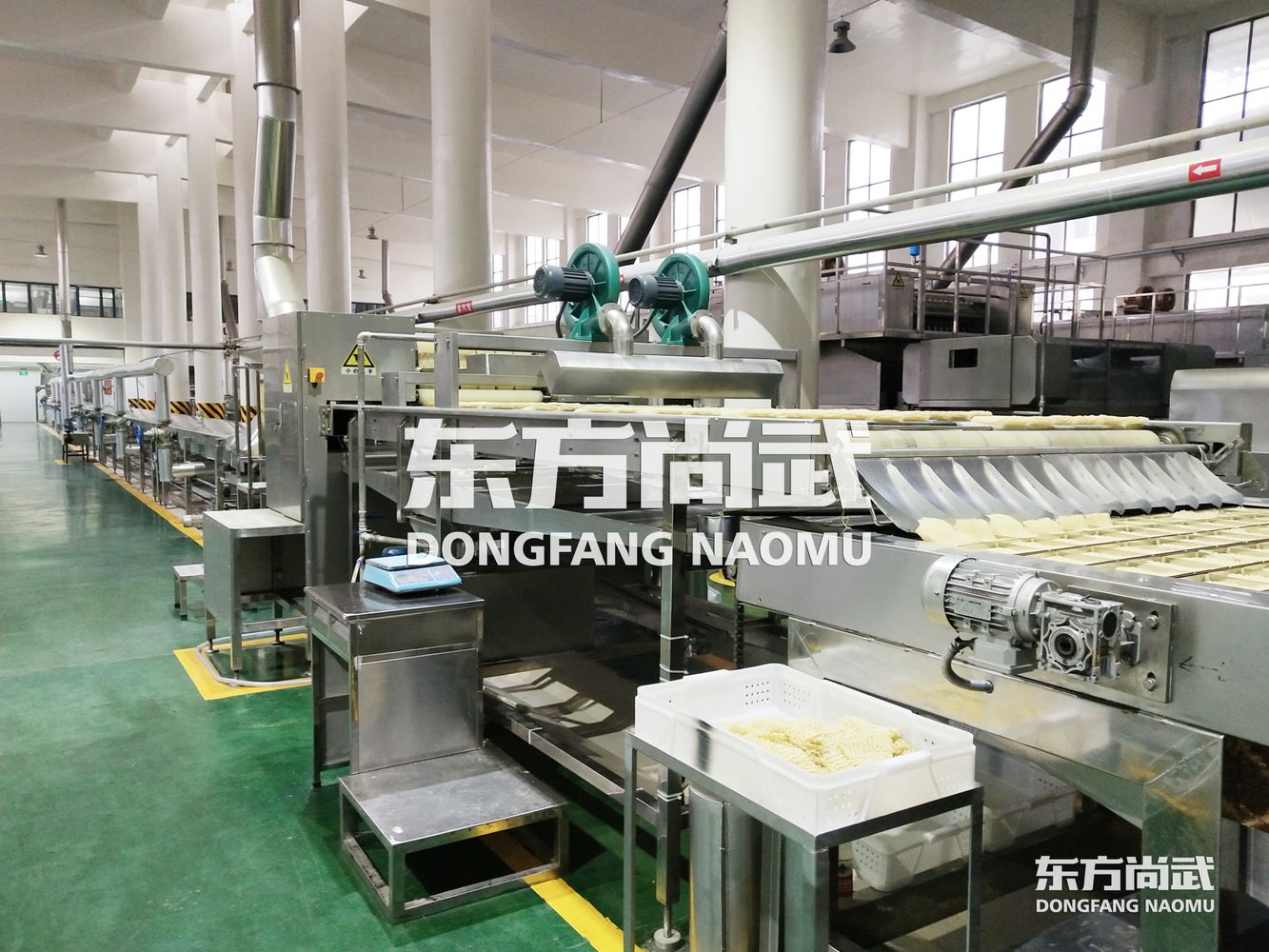
Products
Contact
Contact: Mr. Liu
Mobile:+86-13598833123
E-mail:hndfjt@126.com
Address: No. 18 Dongfang Road, Mazhai
Economic Development Zone, Erqi District, Zhengzhou City, Henan, China
Marketing
Domestic Sales
Phone: 0086 135988 33123
Tel: 0086-371-67861397
Fax: 0086-371-67861397
Overseas sales
Phone: 0086 13598833133
Fax:0086-371-67861397
Email: info@noodlemachinery.com
