
Take the user as the foundation and the market as the core; establish the corporate philosophy of "innovative management
The Promise of Semi-Dry Noodles: Balancing Freshness and Shelf Life
Classification:
News
Group News
Industry News
Special Reports
Author:
DONGFANG NAOMU
Source:
www.noodlemachinery.com
Release time:
2025-09-27
The universal appeal of fresh noodles, cherished for their texture, taste, and nutritional value, is tempered by a significant logistical challenge: their high moisture content makes them extremely perishable. This inherent susceptibility to spoilage has historically posed immense difficulties for large-scale production and distribution, limiting their availability. Traditional approaches to solving this problem have largely centered on interventions after the noodles are made. Researchers and manufacturers extensively experimented with methods such as adding chemical preservatives, applying various sterilization techniques, and developing advanced packaging. While these measures did, to a degree, alleviate the issue of rapid microbial growth and extend shelf life, they often came with compromises. The use of preservatives, in particular, raised concerns about potential impacts on the nutritional integrity of the noodles and, ultimately, consumer health, creating a demand for a more natural solution.
This pursuit of a better alternative led to the development of semi-dry noodles, a product category that strategically occupies the middle ground between fresh and fully dried noodles. The core innovation lies not in addition, but in reduction. By carefully controlling the dehydration process, the moisture content of fresh noodles is precisely lowered to a specific range, typically between 22% and 26%. This partial dehydration is a critical balancing act. It removes just enough water to create an environment that is significantly less hospitable to the microorganisms responsible for spoilage, thereby effectively inhibiting their growth and reproduction. The result is a remarkable extension of shelf life, allowing the noodles to remain stable at room temperature for periods generally ranging from 60 to 90 days, without relying on chemical preservatives.
Crucially, this process is designed to preserve the very qualities that make fresh noodles desirable. When the dehydration parameters are correctly managed, the semi-dry noodles retain the superior color, authentic taste, and nutritional profile closely associated with their fresh counterparts. They offer a culinary experience far superior to fully dried noodles, which often require longer cooking times and can have a different texture. The success of this technology is exemplified by the advancements made by manufacturers such as Zhengzhou Dongfang Naomu Food Machinery Co., Ltd., which have refined the equipment needed for precise and efficient production. The prospects for semi-dry noodles in the future market are exceptionally promising. As preservation technologies continue to evolve and the global network of fresh logistics expands, increasing the transportation radius for temperature-sensitive goods, the demand for high-quality, convenient, and preservative-free staple foods is set to grow. Semi-dry noodles, perfectly positioned at the intersection of freshness, convenience, and natural preservation, are well-equipped to meet this demand and become a increasingly important segment in the global food industry.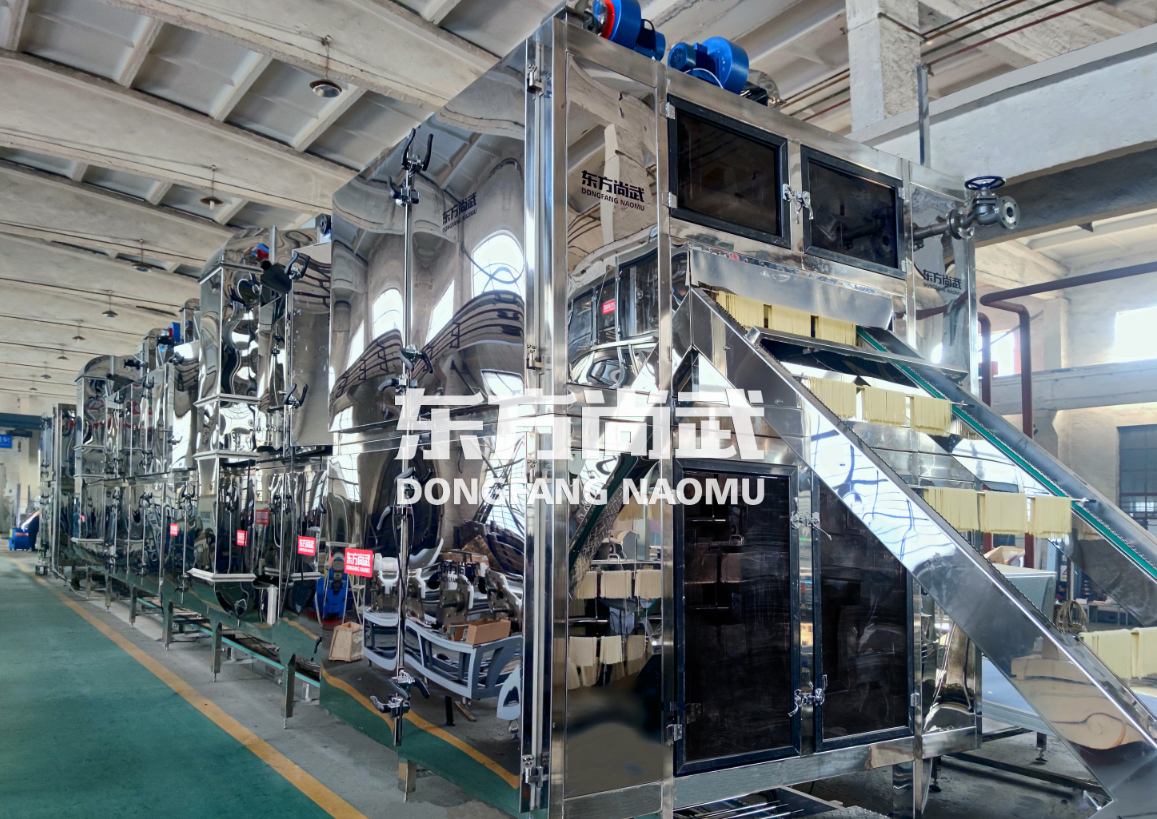
Products
Contact
Contact: Mr. Liu
Mobile:+86-13598833123
E-mail:hndfjt@126.com
Address: No. 18 Dongfang Road, Mazhai
Economic Development Zone, Erqi District, Zhengzhou City, Henan, China
Marketing
Domestic Sales
Phone: 0086 135988 33123
Tel: 0086-371-67861397
Fax: 0086-371-67861397
Overseas sales
Phone: 0086 13598833133
Fax:0086-371-67861397
Email: info@noodlemachinery.com
