

Take the user as the foundation and the market as the core; establish the corporate philosophy of "innovative management
Factors Affecting Consistency in Instant Noodle Cake Weights
Classification:
News
Group News
Industry News
Special Reports
Author:
DONGFANG NAOMU
Source:
www.noodlemachinery.com
Release time:
2025-05-10
In the production of instant noodles, maintaining consistent noodle cake weights is vital for ensuring product quality and satisfying consumers. However, achieving uniformity is no easy task due to a variety of factors that can lead to inconsistencies. Understanding these factors is crucial for enhancing production efficiency and product quality.
The variability in the dough mixing process is one of the main causes of inconsistent noodle cake weights. If the dough is not mixed evenly, it can result in an uneven distribution of ingredients, which in turn leads to differences in the final weight of the noodle cakes. Moreover, improper control of water content during mixing can affect the dough's consistency. Both excessive and insufficient water can alter the texture and weight of the noodles.
Another significant factor is the precision of the noodle cutting process. If the cutting machinery is not properly calibrated, it may produce noodles of varying lengths and thicknesses. This inconsistency can cause differences in the weight of the final noodle cakes. Modern production lines often employ advanced cutting machines equipped with high-precision blades to minimize such variations.
The steaming process also plays a critical role in determining the final weight of the noodle cakes. Steaming helps gelatinize the starch in the noodles, making them more elastic and easier to handle. However, if the steaming time or temperature is not consistent, it can affect the moisture content of the noodles, leading to weight variations.
Inconsistent drying or frying conditions are another common cause of weight discrepancies. During the frying process, the noodles are dehydrated to extend their shelf life. If the frying temperature or duration is not uniform, some noodles may retain more moisture than others, resulting in different weights. Similarly, air-drying methods require precise control of temperature and humidity to ensure consistent moisture removal.
The equipment used in the production process can also contribute to weight inconsistencies. For example, if the noodle belt or conveyor system is not properly maintained, it may cause uneven distribution of the noodles during the cutting and packaging stages. Zhengzhou Dongfang Naomu Food Machinery Co., Ltd. highlights the importance of high-quality machinery to ensure uniformity and precision in the production process.
Finally, quality control measures are essential for identifying and addressing weight inconsistencies. Regular monitoring and testing of the production line can help detect issues early and ensure that corrective actions are taken promptly. This not only improves product consistency but also enhances overall production efficiency.
In summary, achieving consistent noodle cake weights requires careful attention to multiple factors, including dough mixing, cutting precision, steaming, drying, and equipment maintenance. By addressing these common causes, manufacturers can significantly improve the uniformity of their products and meet consumer expectations for quality and reliability.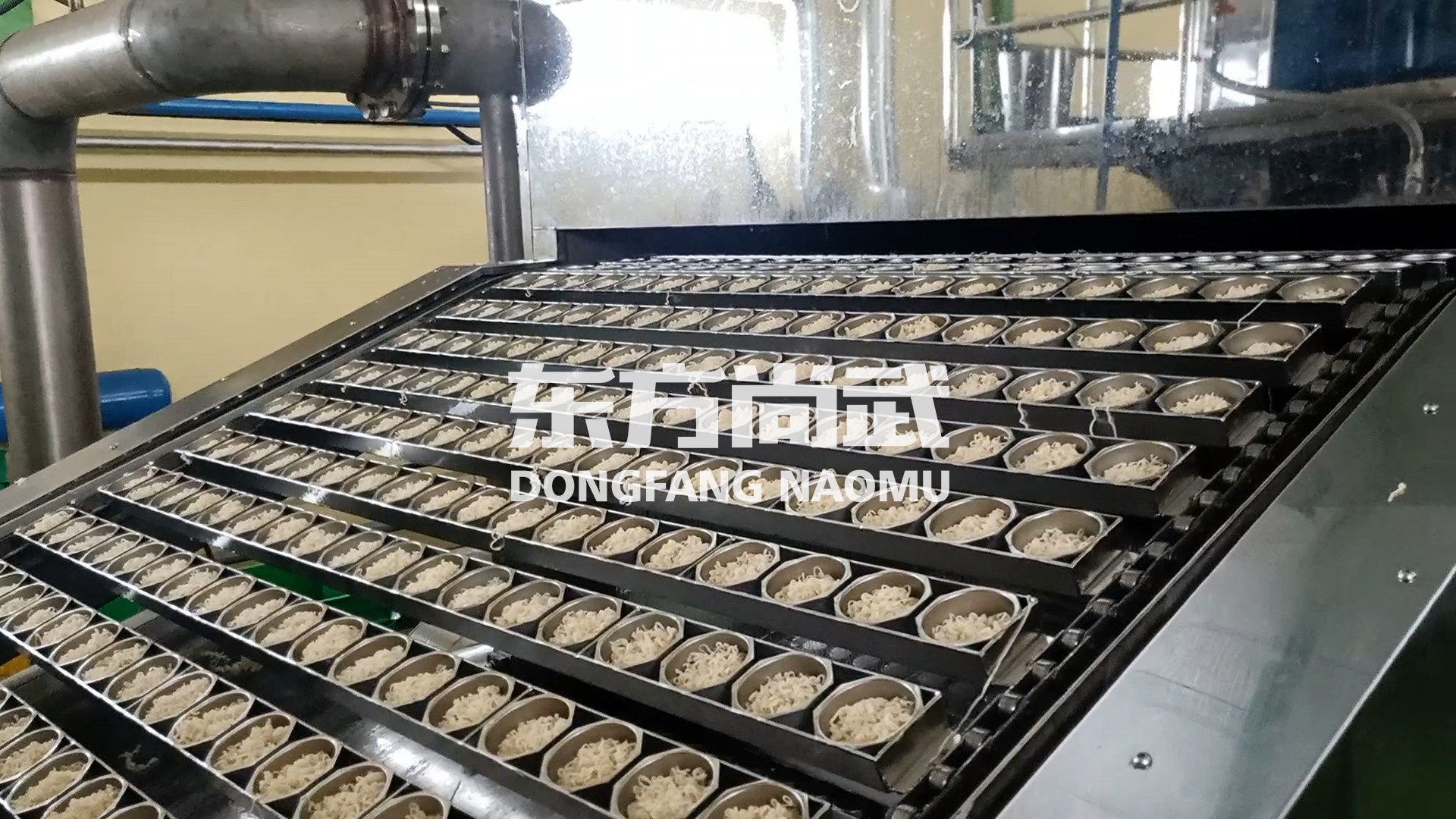
Products
Contact
Contact: Mr. Liu
Mobile:+86-13598833123
E-mail:hndfjt@126.com
Address: No. 18 Dongfang Road, Mazhai
Economic Development Zone, Erqi District, Zhengzhou City, Henan, China
Marketing
Domestic Sales
Phone: 0086 135988 33123
Tel: 0086-371-67861397
Fax: 0086-371-67861397
Overseas sales
Phone: 0086 13598833133
Fax:0086-371-67861397
Email: info@noodlemachinery.com
