

Take the user as the foundation and the market as the core; establish the corporate philosophy of "innovative management
Oil Filtration in Instant Noodle Production with Rotary Drum Filters
Classification:
News
Group News
Industry News
Special Reports
Author:
DONGFANG NAOMU
Source:
www.noodlemachinery.com
Release time:
2026-03-27
In modern food processing, maintaining the purity of cooking oil is essential for both product quality and operational efficiency. One of the most effective solutions for this purpose is the rotary drum filter, a fluid filtration device that operates on a simple yet highly reliable mechanical principle. At the heart of this equipment is a rotating drum, the inner surface of which is covered with a fine-mesh screen. When the unfiltered fluid enters through the inlet, it is directed into the drum in a manner that creates a controlled swirling motion. This vortex flow ensures that solid particles suspended in the fluid are carried uniformly toward the mesh surface. The screen acts as a precise barrier, allowing only the clean liquid to pass through and exit via the outlet, while the retained solids gradually accumulate on the inner surface to form a filter cake. This cake is subsequently removed through a continuous discharge mechanism, enabling uninterrupted filtration with minimal downtime.
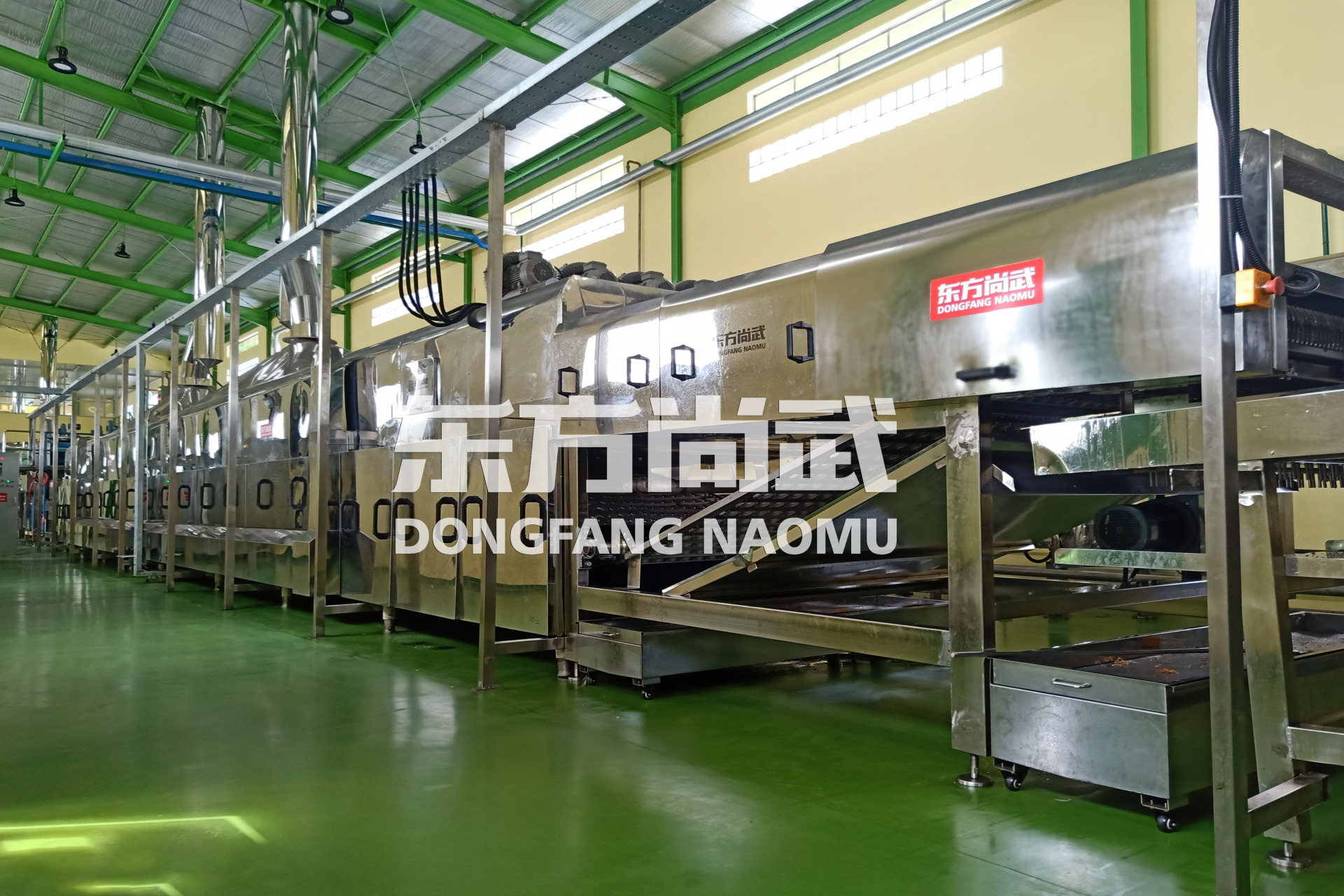
Within the context of instant noodle production, such filtration systems are typically installed directly beside the frying tank, forming an integrated part of the frying line. As the noodles are fried, the oil is continuously circulated through the rotary drum filter, ensuring that the frying medium is constantly being purified. This in-line configuration is critical because frying oil degrades rapidly when exposed to high temperatures and residual food particles. By removing fine impurities, carbonized debris, and other harmful byproducts in real time, the system effectively slows down the increase in free fatty acids and inhibits the formation of peroxides—two primary indicators of oil deterioration. The result is a consistently clean and clear frying tank, which not only improves the visual appearance and taste of the finished noodles but also significantly extends the usable life of the oil. Extended oil life translates directly into lower production costs and reduced waste, making the rotary drum filter a valuable investment for large-scale manufacturing operations.
Beyond the immediate benefits of oil conservation, the consistent removal of particulates also contributes to food safety and product uniformity. Unfiltered particles can act as catalysts for further oil degradation and may lead to undesirable flavors or inconsistent browning of noodle blocks. With a well-designed filtration system, manufacturers can maintain stable frying conditions over longer production runs, reducing the need for frequent oil changes and minimizing production interruptions. The mechanical reliability of the rotary drum design further supports continuous operation, as the self-cleaning nature of the drum prevents clogging and reduces manual maintenance requirements.
For food manufacturers seeking to optimize their instant noodle production lines, the ability to tailor equipment to specific product parameters is paramount. Different noodle varieties require precise control over block dimensions, weight, and texture, all of which influence the frying process and, consequently, the demands placed on the filtration system. Zhengzhou Dongfang Naomu Food Machinery Co., Ltd. has developed a comprehensive approach to instant noodle production line engineering, drawing on extensive experience in serving major food enterprises both domestically and internationally. By integrating rotary drum filters that are precisely matched to the client’s noodle size, weight specifications, and production capacity, the company ensures that each line operates at peak efficiency. This commitment to customization, combined with thorough system service and professional technical support, enables manufacturers to achieve consistent product quality while maximizing the economic lifespan of their frying oil.
Products
Contact
Contact: Mr. Liu
Mobile:+86-13598833123
E-mail:hndfjt@126.com
Address: No. 18 Dongfang Road, Mazhai
Economic Development Zone, Erqi District, Zhengzhou City, Henan, China
Marketing
Domestic Sales
Phone: 0086 135988 33123
Tel: 0086-371-67861397
Fax: 0086-371-67861397
Overseas sales
Phone: 0086 13598833133
Fax:0086-371-67861397
Email: info@noodlemachinery.com
