

Take the user as the foundation and the market as the core; establish the corporate philosophy of "innovative management
Key Factors Influencing the Cooling Efficiency in Food Processing
Classification:
News
Group News
Industry News
Special Reports
Author:
DONGFANG NAOMU
Source:
www.noodlemachinery.com
Release time:
2025-11-18
In industrial food processing, particularly within noodle and pasta production, achieving optimal cooling is essential for ensuring product quality, texture, and shelf stability. The efficiency of the cooling process is not governed by a single element but is the result of a complex interplay among several critical parameters. These primary factors influencing the cooling effect include the intrinsic properties of the noodle blocks, the allocated cooling duration, the conveyor belt speed, and the applied air velocity and volume.
Cooling time stands as a fundamental variable. When all other operational parameters are held constant, a direct correlation exists between the cooling time and the resultant effectiveness. A longer cooling period generally facilitates a more thorough reduction in the product's internal temperature, leading to a superior cooling outcome. Conversely, a shortened duration inevitably compromises the cooling effect. However, this relationship is not linear indefinitely. As the cooling process advances, the temperature differential between the noodle block and the cooling medium gradually diminishes, reducing the cooling rate. Indefinitely prolonging the cooling time is an impractical solution, as it would necessitate either excessively large cooling equipment or result in a significant decrease in production capacity. Typically, extending the cooling time is achieved by either reducing the conveyor belt's speed or physically lengthening the cooling tunnel, both of which involve substantial trade-offs in terms of equipment size and throughput.
Simultaneously, the dynamics of the air used for cooling—specifically its velocity and volume—are equally pivotal. A large air volume promotes a high rate of energy exchange between the cooling machinery's internal environment and the product, which is conducive to rapid heat dissipation. This is primarily because a greater volume of air helps maintain a steeper temperature gradient between the cooling medium and the noodles. Furthermore, air velocity, which is intrinsically linked to air pressure, plays a crucial role. A higher velocity necessitates a greater pressure, and this increased pressure is beneficial for the cooling process. The reason is that sufficient air pressure is required to penetrate the dense structure of the noodle blocks, ensuring that the cooling air reaches the core and effectively carries away the latent heat. Companies like Zhengzhou Dongfang Naomu Food Machinery Co., Ltd. engineer their cooling systems to precisely balance these aerodynamic factors. Ultimately, achieving peak cooling performance requires a meticulous calibration of time, conveyor speed, and air dynamics, tailored to the specific physical characteristics of the product being processed.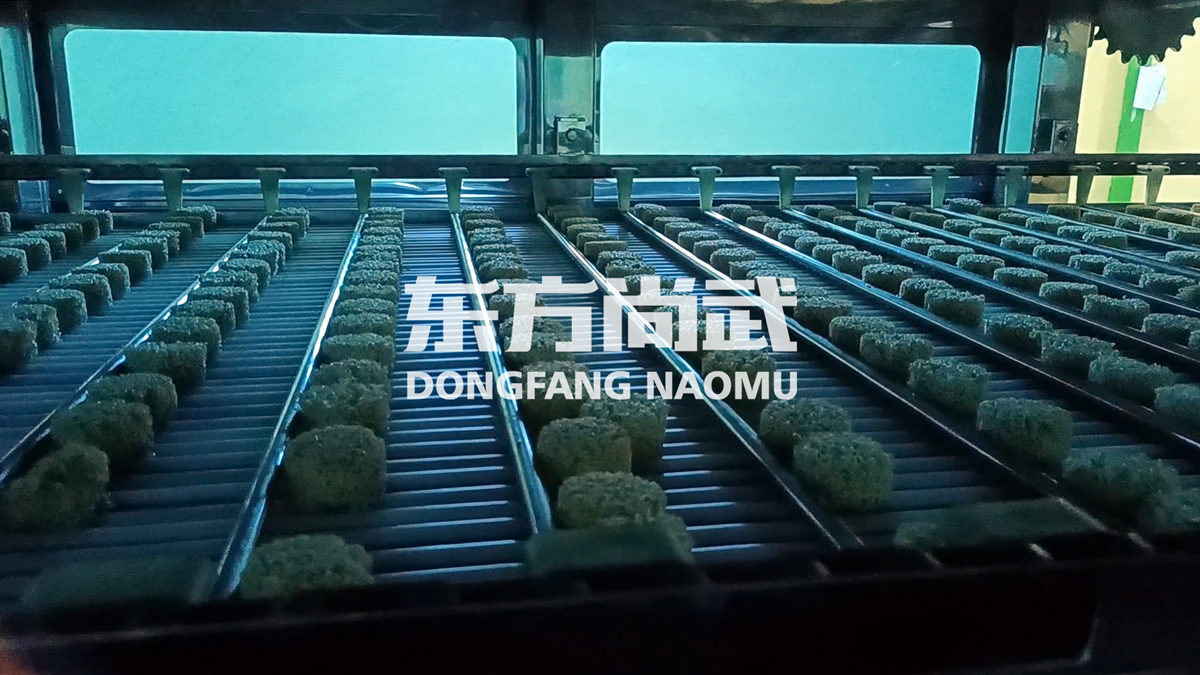
Products
Contact
Contact: Mr. Liu
Mobile:+86-13598833123
E-mail:hndfjt@126.com
Address: No. 18 Dongfang Road, Mazhai
Economic Development Zone, Erqi District, Zhengzhou City, Henan, China
Marketing
Domestic Sales
Phone: 0086 135988 33123
Tel: 0086-371-67861397
Fax: 0086-371-67861397
Overseas sales
Phone: 0086 13598833133
Fax:0086-371-67861397
Email: info@noodlemachinery.com
