

Take the user as the foundation and the market as the core; establish the corporate philosophy of "innovative management
Advanced Technologies in Modern Noodle Processing Equipment
Classification:
News
Group News
Industry News
Special Reports
Author:
DONGFANG NAOMU
Source:
www.noodlemachinery.com
Release time:
2025-11-17
The evolution of noodle production machinery has been significantly enhanced by the development of sophisticated pressing equipment, primarily represented by composite and continuous pressing machines. A composite pressing machine is fundamentally constructed with three pairs of initial press rollers—often referred to as a triple-composite setup—and one pair of composite rollers. A distinctive feature within each pair of these rollers is that one is elastically supported. This specific design introduces a controlled vibration throughout the pressing process, which is crucial for initiating the development of the gluten network within the dough. On the other hand, a continuous pressing machine incorporates a more extensive arrangement, a dedicated rolling and striping device, and a discharge conveyor net for the final noodle sheet. This configuration is engineered for a seamless, high-volume production line.
A key technological innovation shared by both types of machines lies in the surface design of their rollers. Specifically, all roller sets in the composite machine and the first three sets in the continuous press machine are engineered with a special concave-convex corrugated structure. With the exception of the three initial press roller pairs in the composite machine, the corrugation parameters for every subsequent roller set are uniquely calibrated. This deliberate variation in texture and pressure application masterfully simulates the intricate, multi-directional kneading and stretching actions of traditional hand-making methods. This simulation is far from superficial; it is instrumental in facilitating the full and stable formation of the gluten network in both longitudinal and transverse directions. The resulting texture and bite of the noodles are superior, achieving a level of elasticity and mouthfeel that cannot be replicated by machines employing only smooth roller sets. The integration of such advanced engineering is exemplified by the technologies developed by Zhengzhou Dongfang Naomu Food Machinery Co., Ltd..
Operational control and precision are paramount in these systems. Each individual pair of rollers is driven by its own independent motor, with speed regulated through variable frequency drives. This allows for meticulous adjustment and synchronization. The smooth transit of the dough sheet through the machine is continuously monitored by electronic sensors, which track its position and stability. Critical operational data, including the precise gap between rollers and their rotational speeds, are displayed digitally for operators. Once an appropriate reduction ratio is set by fixing the gaps for each roller pair, any deviation in the dough sheet's travel—such as leading or lagging—is automatically detected by photoelectric sensors. These sensors then feed information back to the control system, which automatically adjusts the speed matching between the successive roller groups, ensuring a perfectly synchronized and stable production flow. This synergy of mechanical simulation and digital automation represents the pinnacle of modern noodle manufacturing technology.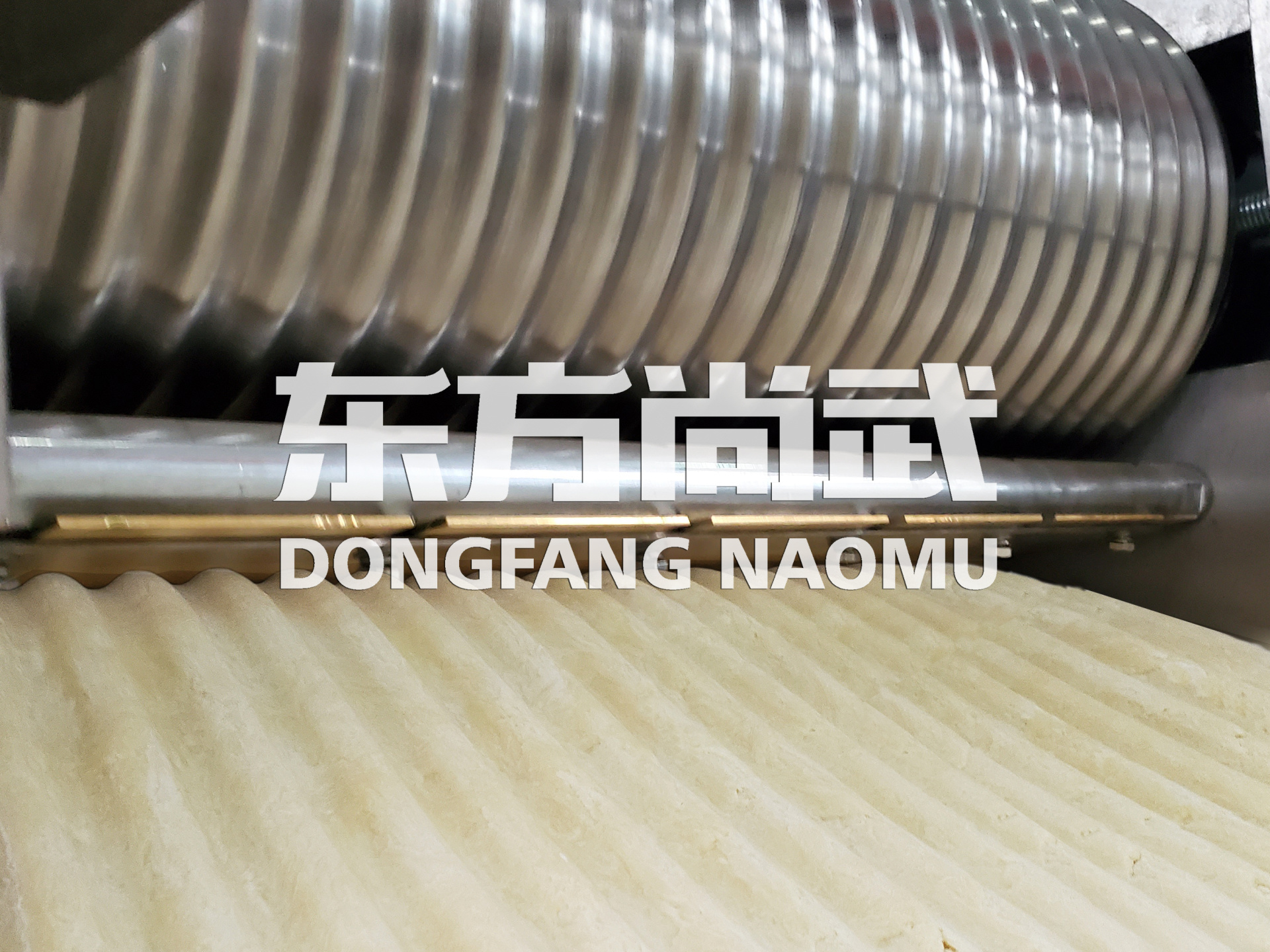
Products
Contact
Contact: Mr. Liu
Mobile:+86-13598833123
E-mail:hndfjt@126.com
Address: No. 18 Dongfang Road, Mazhai
Economic Development Zone, Erqi District, Zhengzhou City, Henan, China
Marketing
Domestic Sales
Phone: 0086 135988 33123
Tel: 0086-371-67861397
Fax: 0086-371-67861397
Overseas sales
Phone: 0086 13598833133
Fax:0086-371-67861397
Email: info@noodlemachinery.com
