
Take the user as the foundation and the market as the core; establish the corporate philosophy of "innovative management
The Science and Benefits of Vacuum Dough Mixing in Modern Noodle Production
Classification:
News
Group News
Industry News
Special Reports
Author:
DONGFANG NAOMU
Source:
www.noodlemachinery.com
Release time:
2025-09-25
The pursuit of the perfect noodle—a staple food across countless cultures—has long driven innovation in food processing technology. At the heart of this quest lies a critical stage: dough mixing. While traditional methods have sufficed for generations, a technologically advanced process known as vacuum dough mixing has emerged as a superior technique, fundamentally enhancing the quality, texture, and efficiency of noodle manufacturing. This method revolves around a simple yet powerful principle: mixing wheat flour and water in a controlled environment from which air has been evacuated.
The core scientific principle of vacuum dough mixing is its operation under negative pressure. In a standard atmospheric mixing environment, air pockets are inevitably incorporated into the dough. These pockets contain oxygen, which can lead to oxidation and discoloration of the flour, and they physically impede the intimate contact between water and flour particles. By removing this air, the vacuum environment eliminates these obstacles. Consequently, wheat flour particles, comprising protein molecules (glutenin and gliadin) and starch molecules, are able to quickly and uniformly absorb water. This rapid and even hydration is the foundational benefit of the process. Adequate water absorption is an absolutely critical condition for the subsequent formation of a robust wheat protein network and for the essential process of starch gelatinization during cooking. Without optimal hydration, these transformative processes are incomplete, leading to inferior end products.
The removal of air under vacuum has a direct and profound impact on the protein structure of the dough. As the water penetrates the flour particles unimpeded, the gluten proteins hydrate more efficiently. This promotes the full and rapid transformation of these proteins into a continuous, well-developed three-dimensional network. This gluten network is the structural skeleton of the dough, responsible for its elasticity, strength, and ability to trap gas. A stronger, more uniform network results in a dough that is smoother, more pliable, and less sticky, which significantly improves its machinability in subsequent rolling and shaping stages. This enhanced protein development is a key factor in achieving the desired al dente texture in the final cooked noodle.
Furthermore, the vacuum environment bestows significant visual and qualitative advantages. By eliminating oxygen during mixing, the enzymatic browning reactions that can cause dough to darken are markedly reduced. This results in noodles with a brighter, more appealing, naturally yellow or creamy color. Moreover, the absence of tiny air bubbles within the dough matrix leads to a denser, more homogeneous structure. This density translates into a translucent, glossy appearance in the finished noodle and a noticeably smoother, firmer mouthfeel upon consumption. It also reduces the risk of noodle breakage during drying, packaging, and transportation. The efficiency gains are also notable; the accelerated water absorption often shortens the required mixing time, leading to higher production throughput and energy savings. For manufacturers seeking to elevate their product quality, such as the Zhengzhou Dongfang Naomu Food Machinery Co., Ltd., which specializes in advanced food processing equipment, integrating vacuum mixing technology is a significant step forward.
In conclusion, vacuum dough mixing represents a significant leap in food engineering. By leveraging the simple principle of negative pressure, it optimizes the fundamental interaction between water and flour. This leads to superior protein network formation, improved visual characteristics, and enhanced textural properties in the final noodle product. As consumer demand for high-quality, consistent, and visually appealing noodles continues to grow, vacuum mixing technology stands as a testament to how scientific innovation can refine even the most ancient of food preparation processes, ensuring that the humble noodle reaches its fullest potential.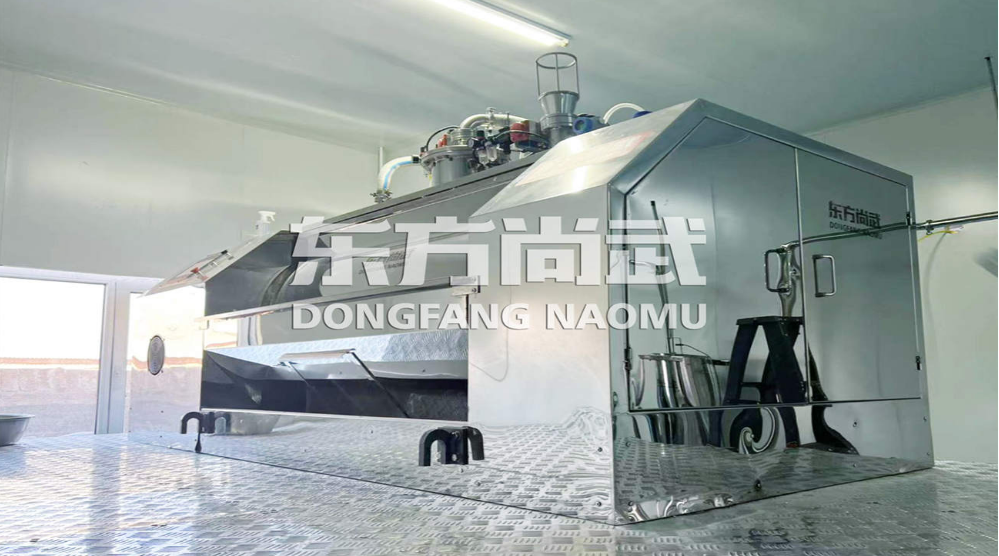
Products
Contact
Contact: Mr. Liu
Mobile:+86-13598833123
E-mail:hndfjt@126.com
Address: No. 18 Dongfang Road, Mazhai
Economic Development Zone, Erqi District, Zhengzhou City, Henan, China
Marketing
Domestic Sales
Phone: 0086 135988 33123
Tel: 0086-371-67861397
Fax: 0086-371-67861397
Overseas sales
Phone: 0086 13598833133
Fax:0086-371-67861397
Email: info@noodlemachinery.com
